
Sex Offender Checks in Terrebonne Parish
The Louisiana State Sex Offender and Child Predator Registry is the main public source for Terrebonne Parish registry records. Louisiana State Police BCII maintains the central database under R.S. 15:542.1.5. TPSO and local police handle assigned registration and verification tasks, send required information to the state, and receive notice when a registrant lives, works, or attends school locally.
The TPSO sex-offender page is a local gateway for registry access and agency contact. Use the state database for the search itself, then call TPSO at 985-876-2500 with local registration questions or suspected noncompliance. Do not use a general criminal-record search as a substitute. Registration status is its own statutory record.
The sheriff's official gateway connects Terrebonne Parish readers to local registry resources.
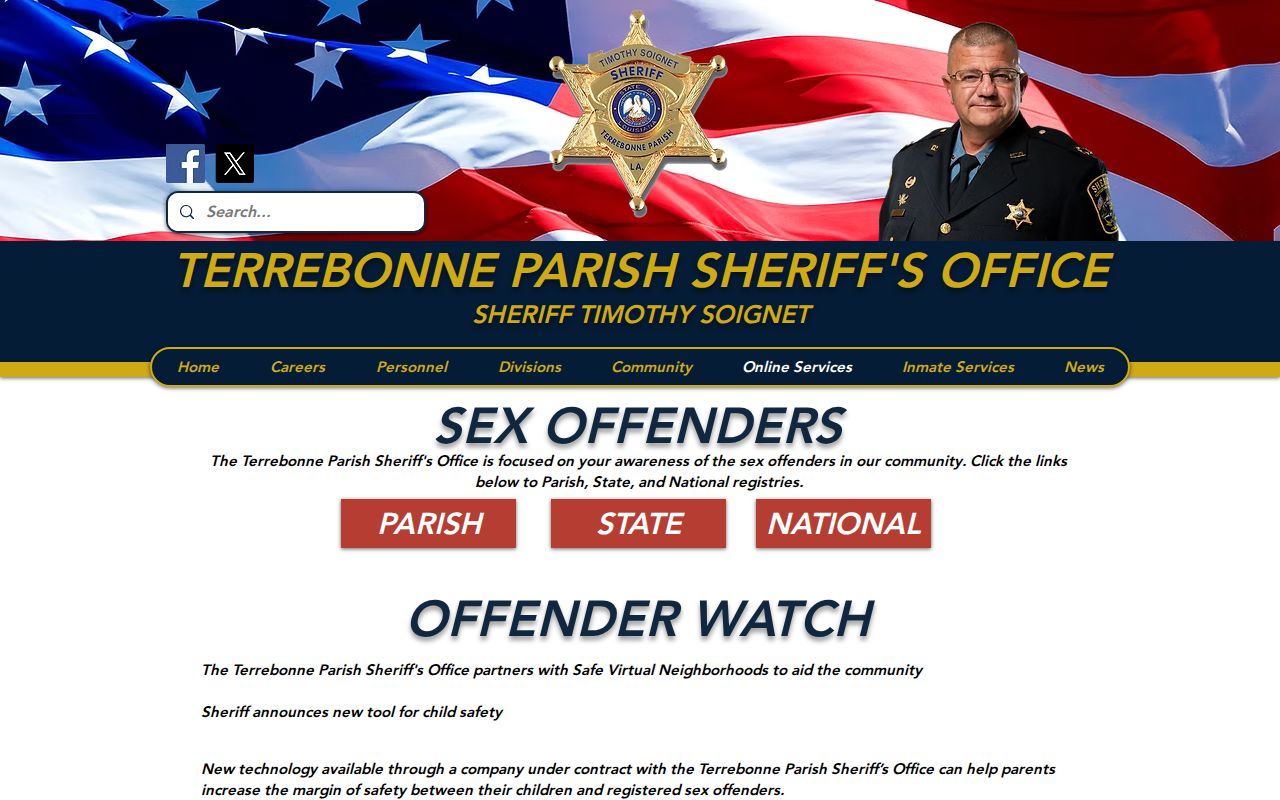
Confirm the current destination and agency instructions there before reporting a concern.
Terrebonne Registry Address Alerts
Louisiana law requires an automatic email notification option tied to a selected geographic radius or ZIP code. A notice can be triggered when a registrant begins residence, employment, or school within that area. This “Get Notified” feature serves ongoing neighborhood awareness better than repeating the same manual search each week.
An alert is only as useful as the location entered. Use a complete address or the relevant Terrebonne Parish ZIP, select the offered radius, and keep the email subscription current. A notice signals a registry change, not an emergency and not proof of new criminal conduct. For an immediate threat, contact emergency services. For a possible registration violation, contact TPSO rather than confronting anyone.
Note: Hurricane displacement and ordinary move-reporting cycles can affect when a Terrebonne address changes in public results.
How to Search the Louisiana Registry
The Louisiana registry gateway supports both identity and location searches. Name fields work best when spelling and aliases are checked. Address, city, ZIP, parish, radius, and map controls help with place-based searches. Select Terrebonne Parish rather than assuming a Houma city filter covers every nearby community.
- Open the official Louisiana registry and review its conditions of use.
- Search by name, or enter an address, city, ZIP, and Terrebonne Parish location filter.
- Compare the result list or map carefully, using aliases, photographs, and physical descriptors.
- Open the full profile and review offense, address, status, verification, and prospective end-date fields.
| Field or Control | Type | Required | Notes |
|---|---|---|---|
| Name | Text | No | First and last name; review aliases carefully |
| Address | Text | No | Used for location or proximity searches |
| City / ZIP | Text or dropdown | No | Use Houma or a five-digit area code |
| Parish | Dropdown | No | Select Terrebonne |
| Radius | Dropdown | Conditional | Live distance options can change |
| Map / List | View toggle | No | Switch between geographic and result views |
| Get Notified | Link or form | No | Email alerts by radius or ZIP |
The state gateway image shows the official route for a Terrebonne Parish sex offender search.
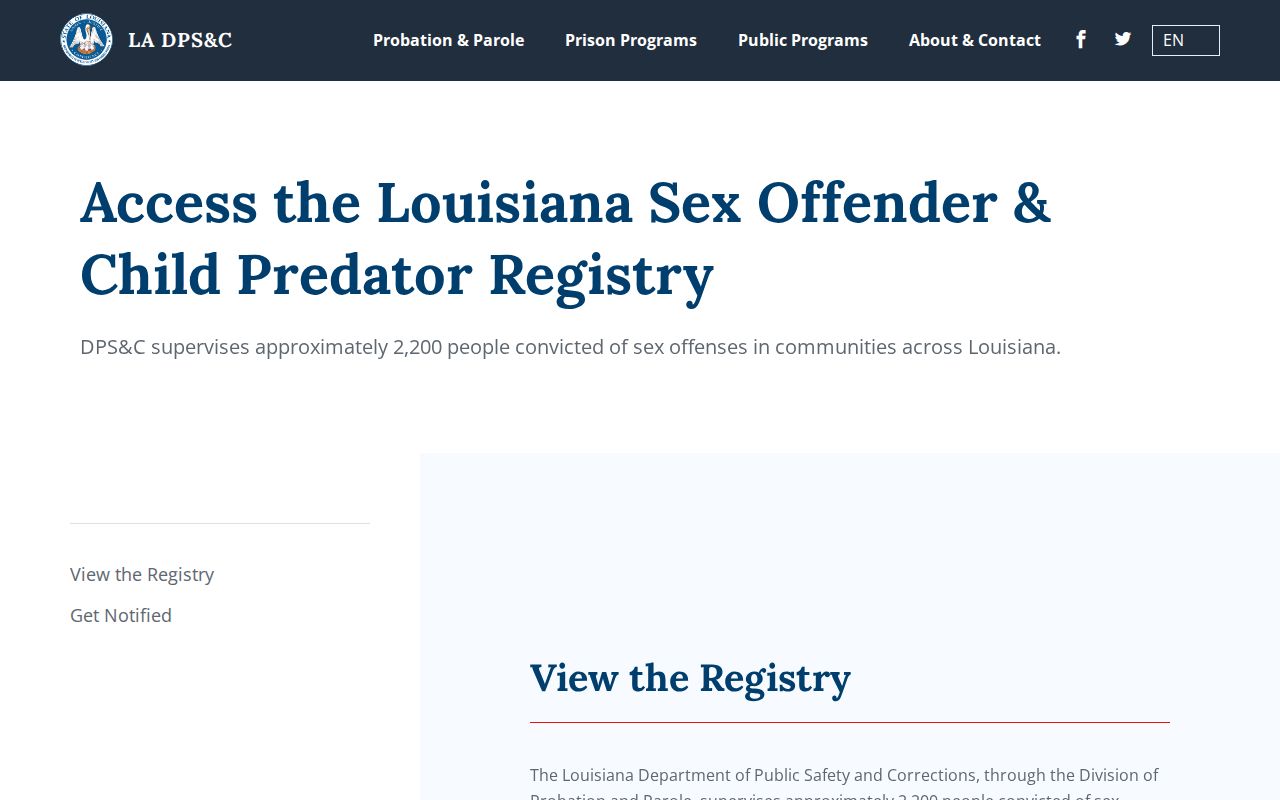
Use the linked registry controls rather than copying results from an unofficial directory.
Terrebonne Registry Versus NSOPW
The Louisiana registry is the primary source for a person registered in Terrebonne Parish. The U.S. Department of Justice National Sex Offender Public Website searches participating jurisdictions together. NSOPW is useful when a name, address, job, or school history crosses Louisiana's border, but it routes the reader back to the contributing jurisdiction for full details.
| Source | Best Use | Limit |
|---|---|---|
| Louisiana registry | Terrebonne Parish filters, local fields, geographic alerts | Covers Louisiana registration data |
| NSOPW | One search across participating state, tribal, and territorial systems | Detail and update timing depend on each jurisdiction |
The official NSOPW interface illustrates the cross-state layer available after a local registry search.
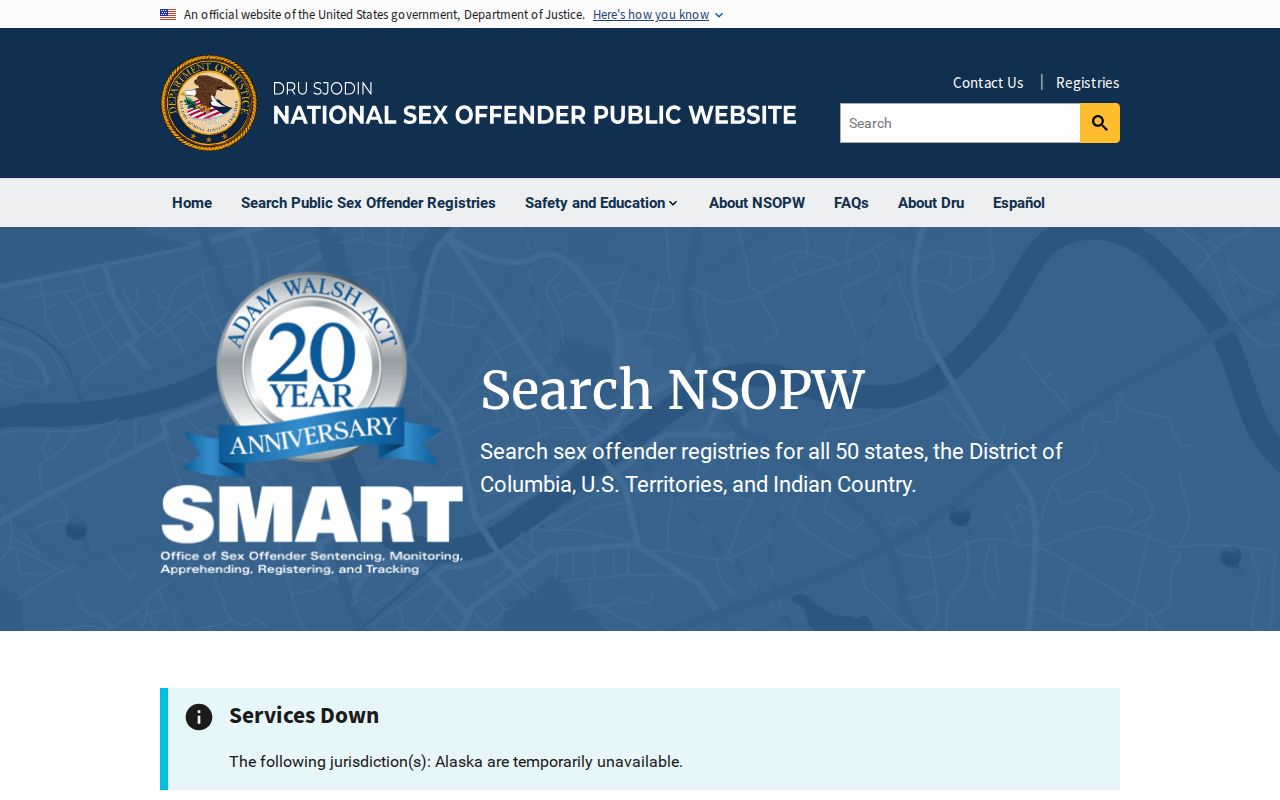
Verify any match in the source jurisdiction's own profile before relying on it.
Inside a Registry Profile
A public profile combines identity, location, conviction, and registration fields so a reader can distinguish people with similar names. It may also show vehicles, scars, marks, tattoos, employer or school information when Louisiana law makes those details public. Read the record as a whole. A photograph alone is not a safe match, and an old address can reflect a move, incarceration, displacement, or a pending verification update.
| Name & Aliases | Registered identity and alternate names used to distinguish records. |
|---|---|
| Photo & Description | Current photograph when available, age, sex, race, and physical descriptors. |
| Registered Address | Residence and any public employer or school location required by law. |
| Offense & Statute | Qualifying offense, jurisdiction, legal citation, and conviction date. |
| Category & Dates | Registration category, start date, and prospective end date. |
| Registration Status | Compliance or noncompliance indicators and verification details. |
Telephone numbers, email addresses, screen names, and IP identifiers are not published as an ordinary list. Louisiana instead permits an online-identifier check that can return whether an identifier matches registry data without revealing the registrant's identity through that query alone.
When a Terrebonne Address Looks Stale
First check the profile's status and verification dates. Next, compare the state result with the TPSO gateway and use the contact channel listed by the agency. Do not visit the address or approach the person. Louisiana requires local agencies to transmit qualifying registration information, criminal history, and the defining statute to BCII within three business days under R.S. 15:545, but public display and real-world movement do not always occur at the same moment.
Report suspected noncompliance to TPSO at 985-876-2500 with the specific profile and the reason for concern. State what was observed without speculation. The agency can determine whether the registrant reported a move, is incarcerated, is displaced, or may be out of compliance. An address discrepancy is a fact to verify, not proof of a new offense.
Louisiana Registration Levels and Requirements
Louisiana registration duties depend on the controlling offense, conviction date, jurisdiction, compliance history, and later statutory changes. Tier language helps summarize the general duration framework, but it is not a simple score of current risk. The live profile's category and prospective end date are more useful than calculating an end date from a chart.
| Common Category | General Duration | Parish Residence Verification |
|---|---|---|
| Tier I | 15 years | Generally annual |
| Tier II | 25 years | Generally semiannual or periodic under the controlling classification |
| Tier III / sexually violent predator | Life | Generally quarterly or more often when law requires |
Official audit material also describes monthly, quarterly, or annual parish checks based on category. A period may change or restart because of the offense, amendment, or noncompliance. Not every Louisiana registrant fits neatly into a federal label. Use the exact public profile and ask the registration agency when a duty is unclear.
Houma and Terrebonne Registry Channels
TPSO is the local contact for registration and verification questions in Terrebonne Parish. Houma Police can have a role where Louisiana law assigns municipal duties, while the state registry remains the public search source. A public-record request is a narrow fallback for a specific, existing, nonexempt agency record that is not shown online. It does not force an agency to create a new registry report.
Terrebonne Parish Sheriff's Office
7857 Main Street
Houma, LA 70360
985-876-2500
Local registration questions and reports of suspected noncompliance.
For a related offense's filed outcome, use the Terrebonne Parish criminal court cases page. For custody following a new arrest, use the Terrebonne Parish arrest lookup. Neither system should be read as a substitute for the registry's current statutory status.
Federal Custody Is a Separate Search
A registry search and a prison locator answer different questions. The registry reports a legal duty and public registration fields. The Federal Bureau of Prisons inmate locator reports federal custody and release information; it does not search Terrebonne Parish registration status, the parish jail, or Louisiana state prisons.
The manifest-assigned federal locator image shows the separate custody tool that should not be mistaken for an offender registry.
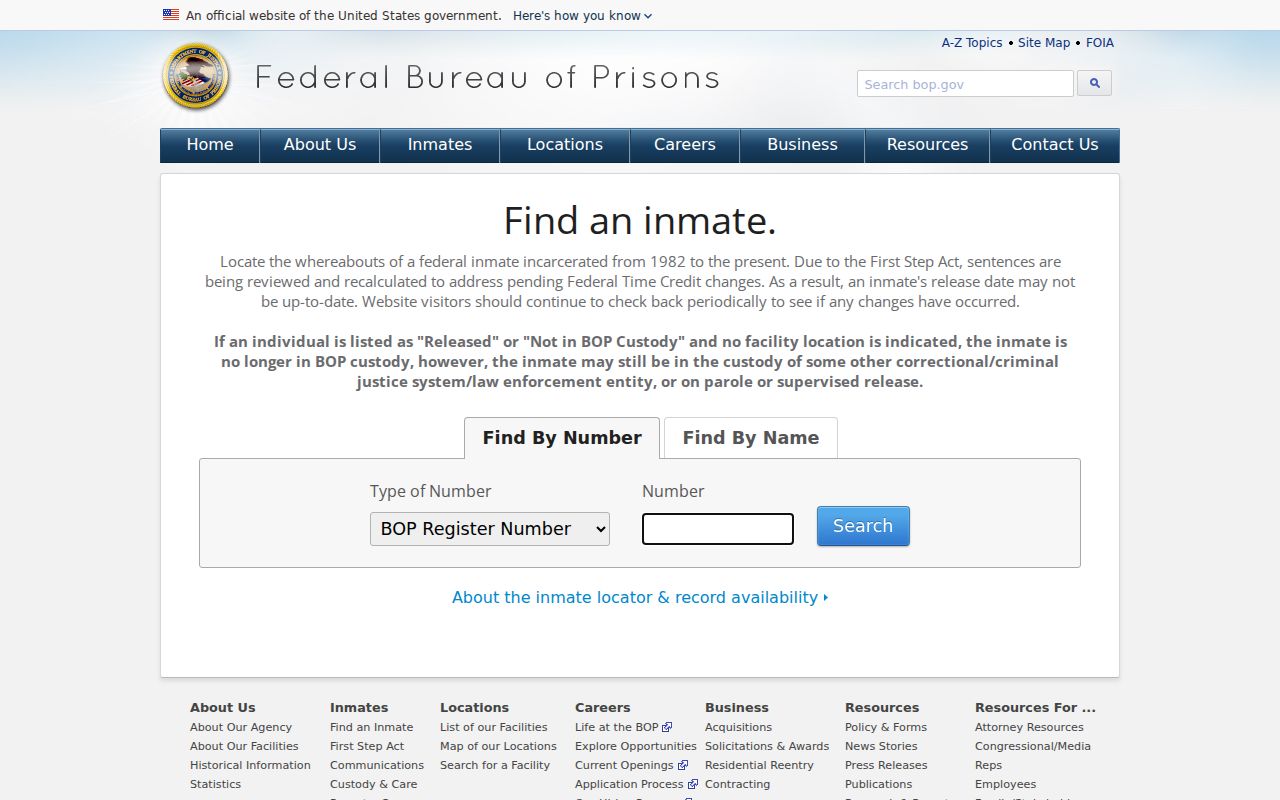
Use BOP only when federal incarceration is the question, then return to the Louisiana registry for current registration information.
Community Notification and Lawful Use
Registry information supports personal, family, and community safety. It should be used to understand a verified public record, choose lawful safety steps, subscribe to geographic notices, or give law enforcement a specific compliance concern. A profile does not prove present danger, predict conduct, or authorize private enforcement. Contact 911 for an emergency and TPSO for a nonemergency registration concern.
Louisiana's registry law protects some online and contact identifiers from ordinary display while still permitting controlled match functions. That balance is one reason screenshots and copied third-party profiles can be incomplete. Return to the official record for current status and verify critical facts with the responsible agency.
Use registry information lawfully: Harassment, threats, intimidation, vigilantism, or crimes directed at a registrant or household can lead to criminal or civil consequences. R.S. 15:542.1.5 authorizes public-safety access, not retaliation.