
Terrebonne Parish Arrest History
Terrebonne Parish Sheriff’s Office, Houma Police Department, Louisiana State Police Troop C, and other agencies create the first arrest-stage documents. When a person enters the Jerry J. Larpenter Criminal Justice Complex, TPSO creates a booking or BOI record and captures identifying information, fingerprints, and a photograph. Those fingerprints can match an existing Louisiana Computerized Criminal History identity or begin a new state cycle.
The records then separate. The jail entry describes custody and booking charges. An arrest report explains the agency’s actions and alleged probable cause, although active-investigation material can be withheld. Prosecutors decide whether to file a charge, and the Terrebonne Parish Clerk records the court result. A complete review therefore follows the event through more than one office.
TPSO Arrest Roster Limits
The TPSO Online Services gateway links to current incarcerations and outstanding warrants. It is the fastest official starting point for someone believed to be in parish custody. It is not a rap sheet, and an empty result does not establish that no arrest occurred. Release, transfer, spelling, timing, or a booking in another jurisdiction may explain the absence.
The official gateway is easier to recognize from its service menu:

Use the displayed BOI or booking identifier when contacting the jail. That number is not the same as a court docket number. Save the search date because a current-custody list changes as people are released or transferred.
Looking Up Terrebonne Parish Arrests
A channel-complete search moves from the arresting agency to custody, reports, and court outcomes. Use only the steps that match the event:
- Check TPSO Current Incarcerations for present parish custody and the official outstanding-warrant function for a warrant question.
- Call JJLCJC at 985-857-0361 when identity, custody, release, or location needs confirmation. LA VINE supplies notifications and an additional custody-status channel.
- Request an existing arrest or incident report from its creator. TPSO can be reached at 985-876-2500; HPD records route through its station or TPCG Public Information.
- Search the Terrebonne Clerk criminal index for charges actually filed and the disposition. The certified online criminal index begins September 6, 1994; older files require clerk help.
- For review of your own fingerprint-linked Louisiana history, use LSP’s LAPS Right to Review. Louisiana offers no general-public LACCH name search.
Bench warrants originate with courts. Confirm a suspected warrant with TPSO and the issuing court before taking action, because only that court can recall it and portal removal can lag.
Terrebonne Jail Record Services
TPSO’s Inmate Services page covers communications, mail, money, property, and letters of incarceration:

A letter of incarceration costs $15 per incarceration and is obtained at TPCJC, 3211 Grand Caillou Road. It documents custody, not the ultimate court outcome. Mail routing also depends on the BOI number. Medical records follow a different custodian because parish government funds medical and facility functions while TPSO supplies the warden and custody staff. Do not send a medical request as though it were a routine booking-sheet request.
Jerry J. Larpenter Criminal Justice Complex
3211 Grand Caillou Road
Houma, LA 70363
985-857-0361
Fax: 985-857-0274
Inside a Terrebonne Parish Arrest Record
Field availability varies by source and disclosure rules. A booking profile may use shorthand that later changes in the filed case.
| Identity | Name, aliases, date of birth, sex, race, physical descriptors, photograph, and BOI number when released. |
|---|---|
| Arrest Event | Arresting agency, date, time, location, incident number, and booking date. |
| Allegations | Booking charge text, statute, counts, and agency-supplied probable-cause information where public. |
| Custody | Facility, housing or status, bond information, release date, and detainers when releasable. |
| Separate Court Data | Docket number, filed charge, minutes, disposition, and sentence come from the clerk rather than the arrest record. |
Match more than a name. Compare the agency, event date, birth information when lawfully displayed, and identifiers. Common names and charge abbreviations make single-field conclusions unreliable.
Finding Released Terrebonne Arrests
Once a name leaves Current Incarcerations, request the underlying document. Identify TPSO, HPD, LSP, or another agency; provide the incident or booking number if known; narrow the date and location; name the record sought; and select inspection, electronic delivery, paper, or certified format. Ask for an estimate before fees exceed a stated amount.
TPSO publishes no universal report form or general arrest-report fee schedule. A written Louisiana Public Records Law request is the fallback. Active investigations, juvenile information, victim identifiers, medical material, security information, and confidential identifiers can be withheld or redacted. The custodian supplies existing records, not a newly written explanation. TPSO news releases are also selective announcements, not a complete historical booking log.
Routing Terrebonne Arrest Requests
Requests succeed when they name the correct custodian. TPSO holds its own incident and arrest reports, executed-warrant information, and parish booking records. HPD holds records created by Houma officers. TPCG E-911 may hold call and computer-aided dispatch material. The Terrebonne Clerk holds court minutes and filings. If the arrest began outside the parish, ask that jurisdiction rather than assuming the local jail also owns the originating report.
A precise request gives the record unit, record type, subject or location, incident or booking number when known, and a narrow time range. Include contact information and the preferred delivery format. Electronic inspection can reduce copying, while a certified copy may be necessary for a formal correction. Request a fee estimate because TPSO has not published a general report price. Do not send Social Security numbers or other unnecessary identifiers in an ordinary public request.
Booking Logs and Recent Arrests
Booking data is closest to the moment of custody. It may show the offense alleged by the arresting agency, bond, and current status before prosecutorial review. The district attorney can refuse, amend, add, or reduce charges. A court may dismiss a case or enter an acquittal. Search dates matter because a live roster can change before related court data appears.
Houma Police arrestees ordinarily move into JJLCJC rather than a separate long-term city jail. Arrests in Bayou Cane, Gray, Schriever, Bourg, Chauvin, Montegut, and Dulac generally route through TPSO because those are unincorporated communities. Use Terrebonne Parish in custody searches even when the mailing address names a bayou community.
LA VINE or Jail Call
Louisiana inmate information presents LA VINE and the DPS&C locator route:
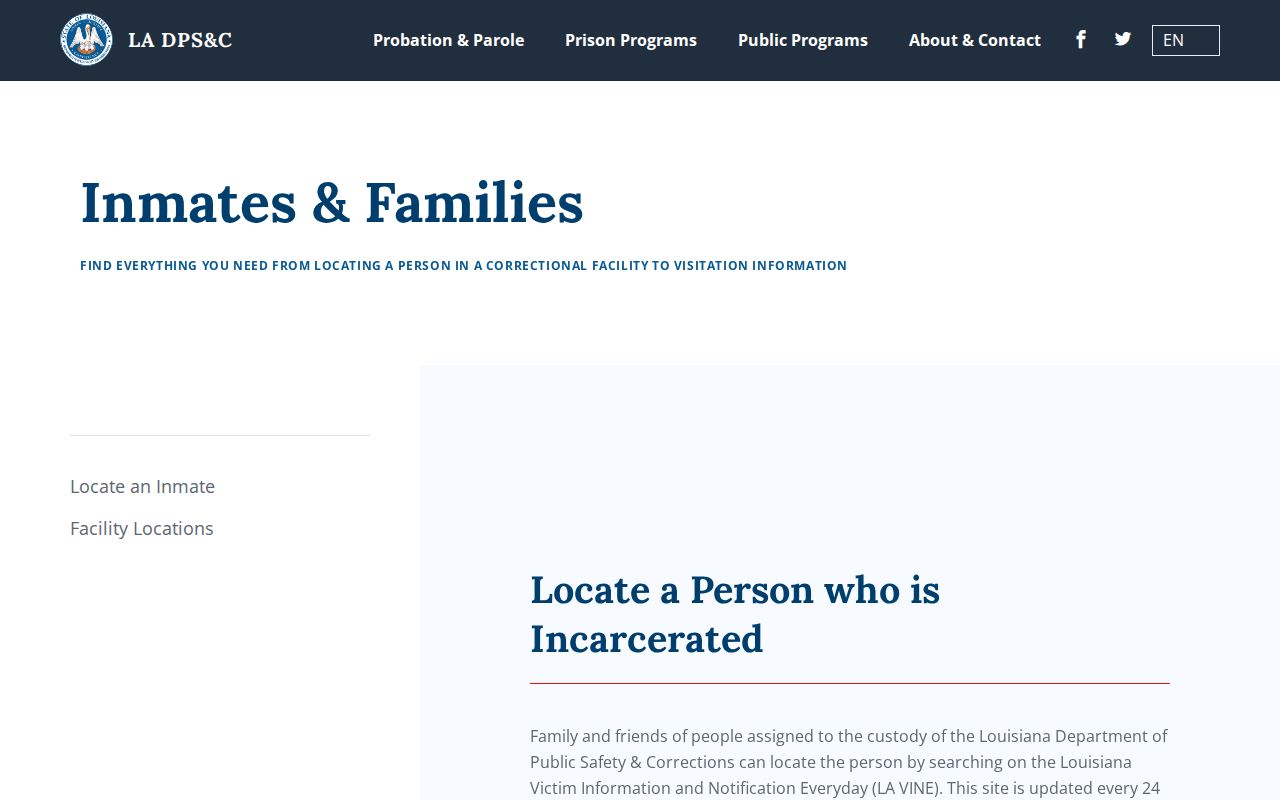
LA VINE is useful for notification and can reflect custody or community-supervision status, but its data updates every 24 hours. Call JJLCJC for an urgent local custody confirmation. For a person moved into state custody, the DPS&C Imprisoned Person Locator line is 225-383-4580.
Louisiana Arrest History Cycle
Booking fingerprints drive the state record. LACCH may contain arrests, dispositions, probation or parole bookings, and incarceration data, but it does not contain other states’ histories. Public users cannot purchase a full LACCH name report. A person reviewing their own Louisiana cycle schedules LAPS fingerprints and chooses secure electronic or embossed mail delivery.
DPS&C also publishes local facility information:
If a state history lacks the outcome, obtain an original, unaltered certified court or district-attorney document. LSP requires matching identity, arrest date, original and amended charges, verdict, and sentence details to correct the cycle.
Three Terrebonne Arrest Dates
Arrested, charged, and convicted are not interchangeable dates. The arrest date marks custody. The filing date marks the prosecutor’s formal court action. A conviction date records a guilty plea or finding, if one occurs. A release date only describes custody status. Keeping these dates separate prevents a recent roster entry from being misread as a completed case.
Charge wording can also evolve. The booking portal may show the arresting officer’s allegation. The district attorney may decline it, file a different statute, or amend counts. Court minutes control the judicial result, while LACCH depends on agencies sending the disposition into the fingerprint cycle. When sources conflict, record each source’s date and obtain the certified disposition rather than selecting the harshest label.
Arrests Are Not Convictions
The Terrebonne Parish criminal court case shows whether prosecutors filed charges and what the court ultimately did.
| Arrest Record | Conviction Record |
|---|---|
| Created by the arresting agency and jail | Created through the court proceeding |
| Proves a booking or arrest event occurred | Documents a finding or plea of guilt |
| Lives with TPSO, HPD, another agency, and state cycle | Lives with the clerk and qualifying state repositories |
| May end in release, no filing, dismissal, or acquittal | May lead to sentence, appeal, expungement, or later relief |
Note: An arrest is not proof of guilt. Many bookings never produce a filed charge or end without a conviction.